Sustainable Development in an Age of Geopolitical Fragmentation
Roundtable, Addis Ababa, Ethiopia
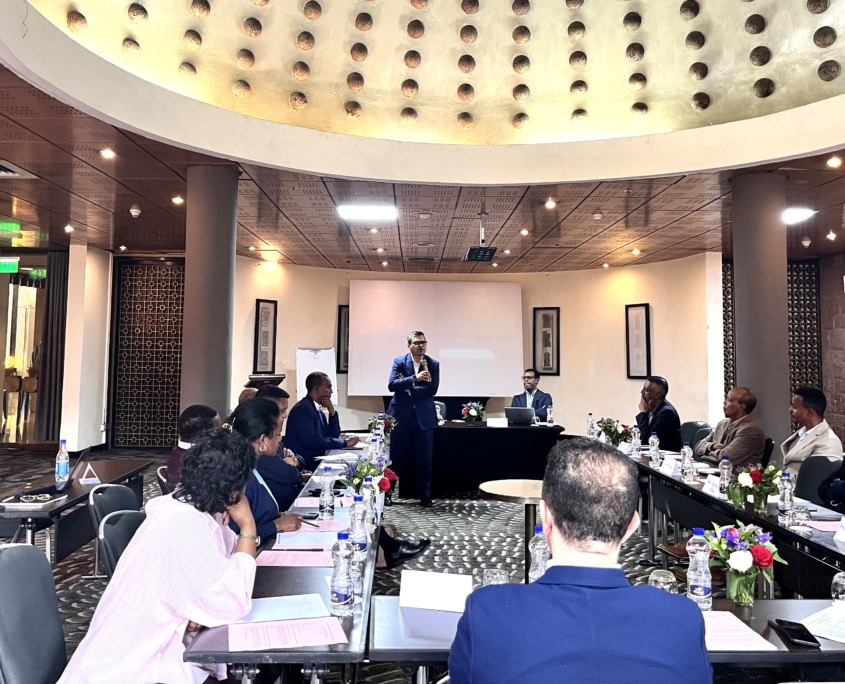
How can sustainable development remain a priority in a world increasingly shaped by geopolitical tensions, shrinking aid budgets, and shifting global priorities? This question brought together policymakers, academics, development practitioners, and civil society representatives for a roundtable hosted by the Centre for Sustainable Development at Addis Ababa University on 28 March 2026.
The discussions focused on how countries can sustain progress towards the Sustainable Development Goals (SDGs) amid growing global uncertainty. While participants acknowledged the significant challenges posed by conflict, fiscal pressures, and changing geopolitical dynamics, the dialogue consistently moved beyond crisis narratives to explore opportunities for adaptation and renewal.
A central theme throughout the event was the need for African countries to define development on their own terms. Rather than viewing declining development assistance solely as a setback, many participants argued that it presents an opportunity to strengthen domestic capacity, promote self-reliance, and ensure that development priorities are driven by national and local aspirations rather than donor agendas. Discussions also highlighted the importance of partnerships based on mutual interests, alongside growing South-South cooperation and regional collaboration.
The future of multilateral institutions was another key topic. Participants reflected on the changing role of organisations such as the United Nations and the need for global governance structures to adapt to a more multipolar world. At the same time, many stressed that sustainable development ultimately depends on capable national institutions, effective governance, and stronger coordination between governments, researchers, and development partners.
The second session focused on African perspectives and homegrown solutions. Speakers highlighted the value of indigenous knowledge, community-led initiatives, and locally rooted institutions in shaping more sustainable development pathways. Examples from Ethiopia illustrated how local ownership, domestic resource mobilisation, and context-specific approaches can strengthen resilience and improve long-term outcomes.
Participants also discussed the opportunities and challenges presented by emerging technologies such as artificial intelligence. While recognising AI’s potential to accelerate development, speakers emphasised the importance of building local technological capacity, investing in independent knowledge institutions, and ensuring that innovation reflects African priorities and contexts.
Across both sessions, participants repeatedly returned to the relationship between research and policymaking. Stronger collaboration between universities, governments, and practitioners was identified as essential for ensuring that research informs policy and contributes to meaningful development outcomes.
Despite the challenges discussed, the roundtable concluded on a hopeful note. Homegrown reforms, economic diversification, stronger regional partnerships, and increasing agency within the Global South were all identified as reasons for optimism. The discussions underscored that, even in a fragmented international landscape, sustainable development remains possible when it is grounded in local ownership, evidence, and inclusive partnerships.